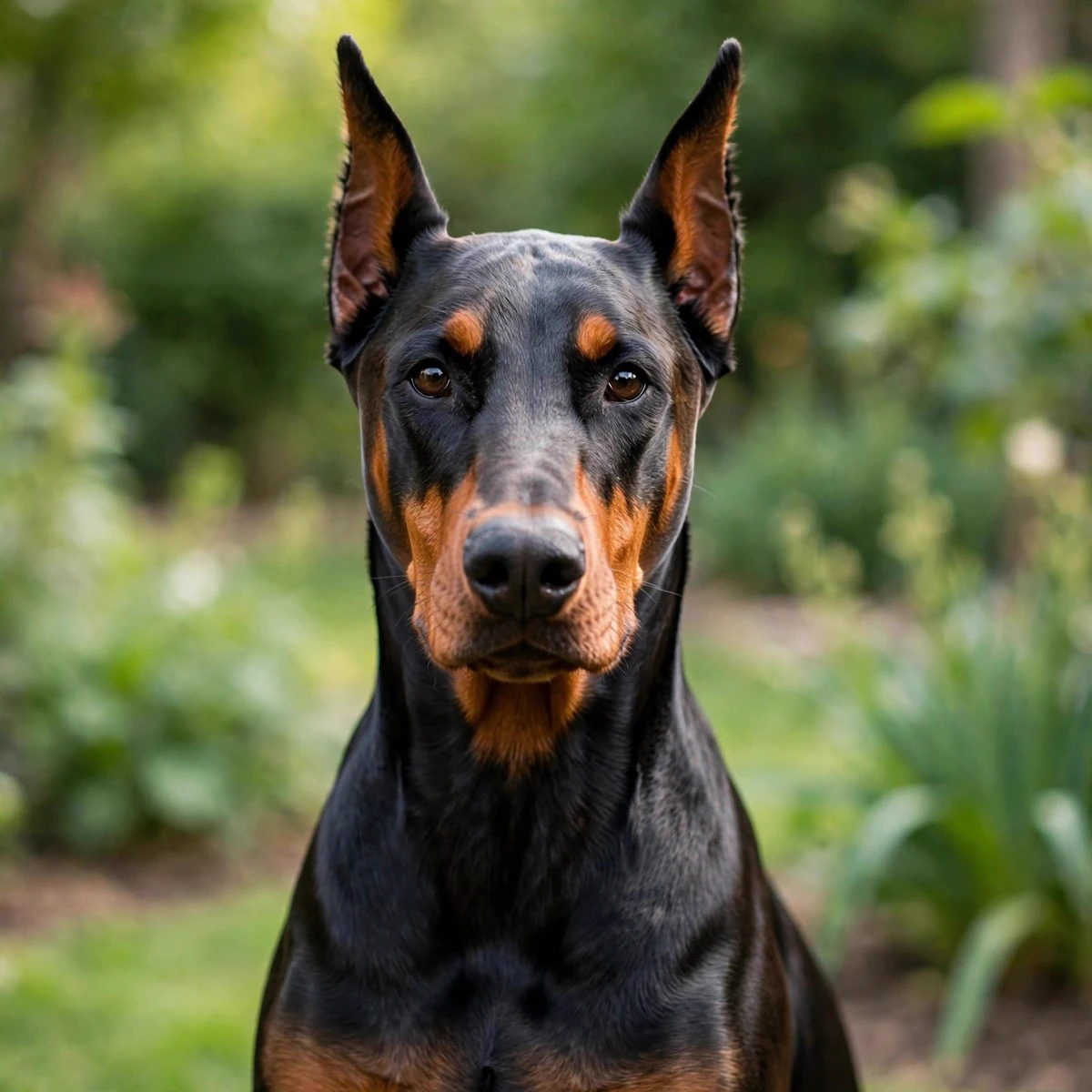
Doberman Pinscher — Complete Breed Guide
Working · from Germany · AKC rank #15 (2025)
Key facts
| Breed group | Working |
| Origin | Germany |
| Weight | 27–45 kg (60–99 lbs) |
| Height | 63–72 cm |
| Lifespan | 10–12 years |
| Coat | short smooth |
| AKC popularity rank (2025) | #15 of 202 recognized breeds |
Trait ratings
Our editorial 1–5 scoring, based on breed-standard temperament data.
Monthly cost
Expect roughly $120–$220 per month (estimate: food, routine vet care, grooming, insurance). Larger breeds and heavy groomers sit at the higher end. Price out the years, not just the day, with our monthly dog cost calculator.
Doberman Pinscher coat colors and varieties
The Doberman Pinscher's coat is short smooth. Within the breed you'll come across varieties buyers search for by name — colors like blue, fawn, and albino — which usually come down to different lines and breeders rather than different dogs. Color doesn't change the temperament, exercise needs, or health picture described above.
If you have your heart set on a specific look, ask the breeder to see the parents and recent litters, and be wary of anyone charging a big premium for a color alone.
Doberman Pinscher food and diet
Expect around 4.5 cups of dry food a day for an average adult Doberman Pinscher — split into two meals. That's a starting point, not a prescription: the right amount depends on the food's calories, your dog's weight, and how much it actually moves.
Get a precise daily portion from our dog food portion calculator, and when in doubt let your vet — and your dog's waistline — be the judges.
Health issues to know
- dilated cardiomyopathy
- von Willebrand's disease
- bloat (GDV)
- hip dysplasia
- First-time owners (easy to train)
- Active owners (running, hiking, sports)
- Low-shedding households
- You can't commit to 1+ hour of daily exercise
- You live in a small apartment with no yard access
- You need a quiet dog (thin walls, close neighbors)
Frequently asked questions
How long does a Doberman Pinscher live?
Typically 10–12 years. Larger individuals and lines with known health issues tend toward the lower end.
How much does a Doberman Pinscher cost per month?
Roughly $120–$220 per month for food, routine vet care, grooming and insurance — an estimate that varies by location.
Is the Doberman Pinscher good for apartments?
It scores 2/5 for apartment suitability. Not ideal — it needs space and struggles in small homes.
Is the Doberman Pinscher good with kids?
It scores 3/5 for kid-friendliness. Generally fine with kids when socialized early.
Does the Doberman Pinscher shed a lot?
Shedding scores 2/5. Minimal shedding.
What is the downside of a Doberman?
Intensity across the board: exercise 5/5, barking 4/5, and a 27–45 kg athlete that needs serious daily work and training (trainability 5/5, thankfully). Health is the other downside — dilated cardiomyopathy is the breed’s well-known heart risk. A Doberman is a lifestyle, not a pet.
Is there a difference between a Doberman and a Doberman Pinscher?
Same breed — ‘Pinscher’ (German for terrier) was dropped from the name in some countries, including the US, while elsewhere both names persist. You may also see ‘Dobermann’ with two n’s, the original German spelling after founder Louis Dobermann. All refer to the same dog.
Why don’t police use Dobermans anymore?
There was never one official reason — it was a gradual shift. Many forces moved toward the Belgian Malinois and German Shepherd for their drive and heat tolerance, while Dobermans stayed popular in private protection and guard work. Some departments still use them; the trend reflects working-dog fashion and breeding pools, not a verdict on the breed.
Keep exploring
Related Working breeds

Compare Doberman Pinscher
Best for your lifestyle
Free tools
Health information is for general guidance only and is not veterinary advice. Always consult your veterinarian about your individual dog. Cost figures are rough estimates and vary by location.