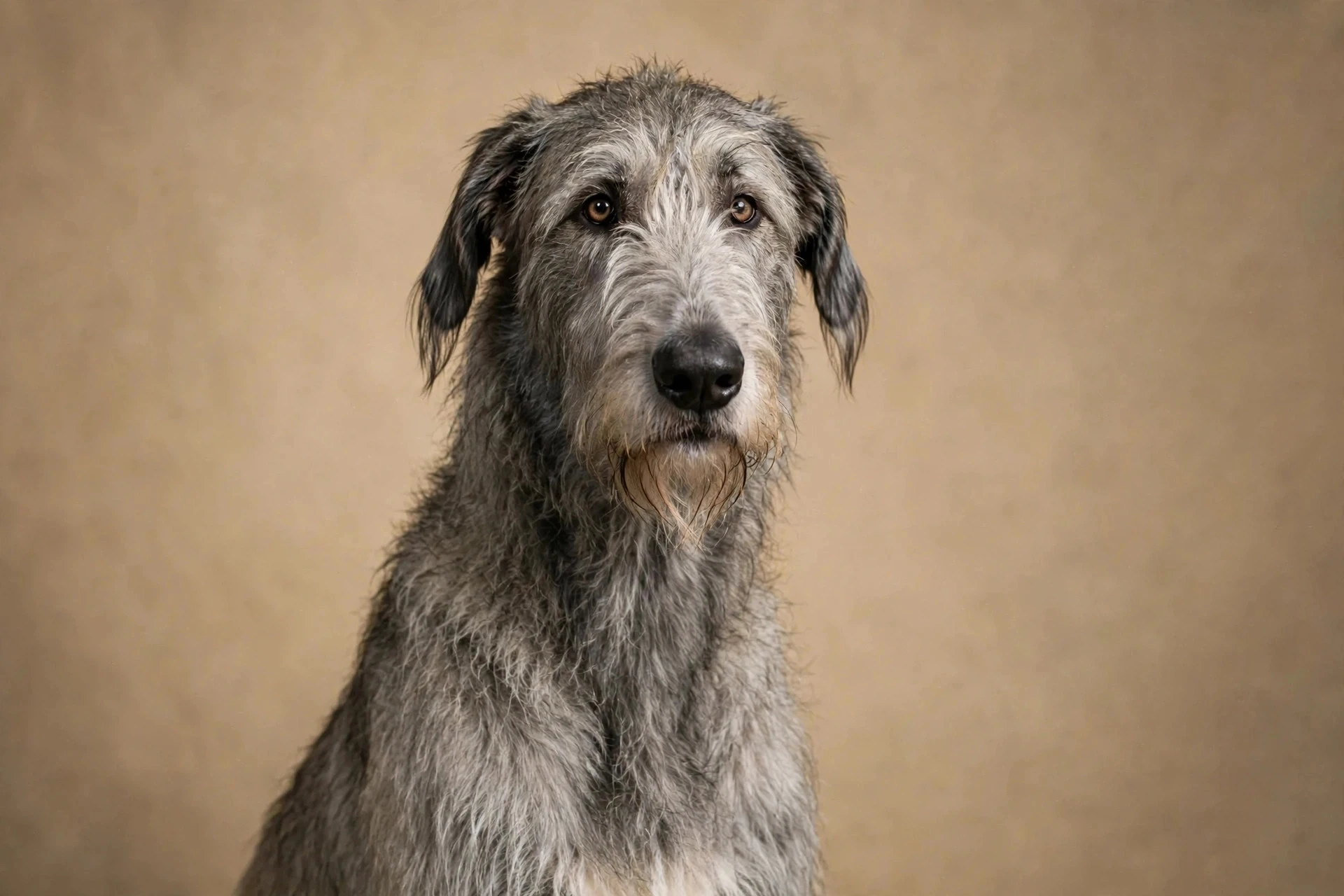
Irish Wolfhound — Complete Breed Guide
Hound · from Ireland · AKC rank #75 (2025)
Key facts
| Breed group | Hound |
| Origin | Ireland |
| Weight | 48–65 kg (106–143 lbs) |
| Height | 76–86 cm |
| Lifespan | 6–8 years |
| Coat | rough wiry double |
| AKC popularity rank (2025) | #75 of 202 recognized breeds |
Trait ratings
Our editorial 1–5 scoring, based on breed-standard temperament data.
Monthly cost
Expect roughly $120–$240 per month (estimate: food, routine vet care, grooming, insurance). Larger breeds and heavy groomers sit at the higher end. Price out the years, not just the day, with our monthly dog cost calculator.
Irish Wolfhound coat colors and varieties
The Irish Wolfhound's coat is rough wiry double. Within the breed you'll come across varieties buyers search for by name — gray, wheaten, red, black, white, brindle — which usually come down to different lines and breeders rather than different dogs. Color doesn't change the temperament, exercise needs, or health picture described above.
The coat needs occasional hand-stripping or raking to stay tidy, not constant clipping — a wiry coat that's clipped soft loses its texture and weather resistance.
What does a Irish Wolfhound cost?
Two budgets matter: the puppy, and everything after. After: about $120–$240 per month for food, routine vet care, grooming, and insurance — larger breeds and heavy groomers sit at the higher end.
The puppy price has no fixed answer — anyone quoting one for the whole internet is guessing. What's worth budgeting honestly for: giant-breed vet bills and the breed's known heart risks, which make insurance or a solid emergency fund less optional than with smaller dogs. Price out the years, not just the day, with our monthly dog cost calculator.
Irish Wolfhound puppies: what to expect
An Irish Wolfhound puppy is a giant in fast-forward — 48–65 kg of dog reaching full size around two years, so every decision in year one is about protecting growing bones and joints. The non-negotiables: a vet check in the first week, vaccinations on schedule, and calm, consistent training from day one.
Wolfhounds mature slowly, reaching full size around two years, and those long legs are fragile while growing: keep exercise gentle and self-directed, feed a large-breed puppy diet on vet advice, and don't rush the growth. The payoff is a calm, dignified adult — the breed is famously gentle indoors despite its scale.
Health issues to know
- dilated cardiomyopathy
- gastric dilatation-volvulus (bloat)
- osteosarcoma (bone cancer)
- hip dysplasia
- Families with children
- You live in a small apartment with no yard access
Frequently asked questions
How long does a Irish Wolfhound live?
Typically 6–8 years. Larger individuals and lines with known health issues tend toward the lower end.
How much does a Irish Wolfhound cost per month?
Roughly $120–$240 per month for food, routine vet care, grooming and insurance — an estimate that varies by location.
Is the Irish Wolfhound good for apartments?
It scores 1/5 for apartment suitability. Not ideal — it needs space and struggles in small homes.
Is the Irish Wolfhound good with kids?
It scores 4/5 for kid-friendliness. Excellent family choice, with normal supervision.
Does the Irish Wolfhound shed a lot?
Shedding scores 3/5. Moderate, manageable shedding.
Why are Irish Wolfhounds rarely kept as pets?
Three honest reasons: scale, lifespan, and cost. At 48–65 kg and up to 86 cm tall with 1/5 apartment suitability, it needs serious space; the 6–8 year lifespan is among the shortest of any breed; and giant-breed food and vet bills run $120–$240 a month. Temperament isn't the issue — Wolfhounds are famously gentle. They are uncommon (#75 in the AKC's 2025 rankings) because few households can honestly meet the logistics, not because the dog is difficult.
Which is bigger, a Great Dane or an Irish Wolfhound?
They are comparable giants and individuals overlap, but as breeds the Irish Wolfhound is typically the taller — up to 86 cm in our dataset — while the Great Dane is often the heavier-built. Both need the same giant-breed logistics: space, food budget, and joint-aware exercise. If you want the tallest dog in the room, lean Wolfhound.
Is the Irish wolfhound aggressive?
No — the breed is famously gentle, dignified, and friendly, with none of the guarding edge of other giant breeds. The management issues are size and sighthound prey drive (it will chase), not aggression. At 48–65 kg, though, even friendliness needs training — an untrained giant that jumps up is a hazard no matter how sweet its intentions.
Keep exploring
Related Hound breeds
Best for your lifestyle
Free tools
Health information is for general guidance only and is not veterinary advice. Always consult your veterinarian about your individual dog. Cost figures are rough estimates and vary by location.