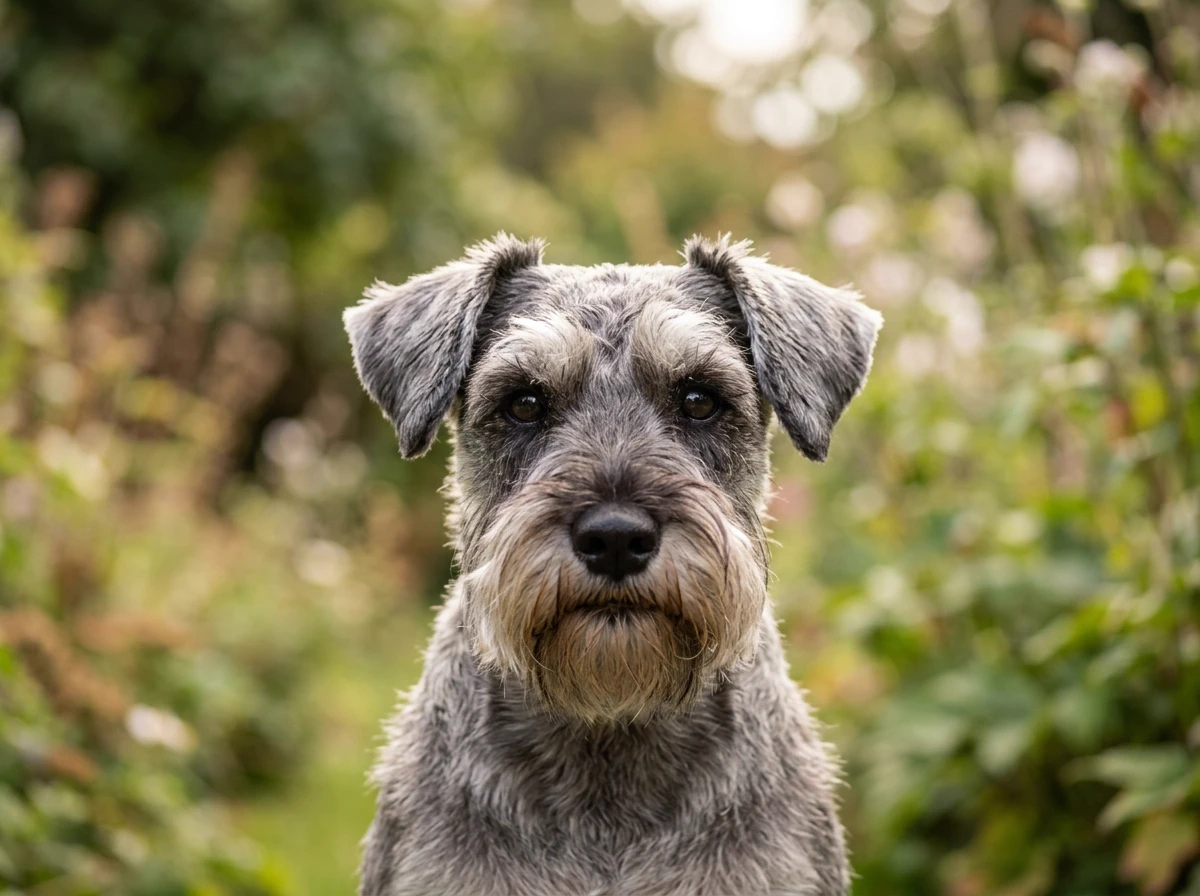
Miniature Schnauzer — Complete Breed Guide
Terrier · from Germany · AKC rank #17 (2025)
Key facts
| Breed group | Terrier |
| Origin | Germany |
| Weight | 5–9 kg (11–20 lbs) |
| Height | 30–36 cm |
| Lifespan | 12–15 years |
| Coat | wiry hypoallergenic |
| AKC popularity rank (2025) | #17 of 202 recognized breeds |
Trait ratings
Our editorial 1–5 scoring, based on breed-standard temperament data.
Monthly cost
Expect roughly $80–$160 per month (estimate: food, routine vet care, grooming, insurance). Larger breeds and heavy groomers sit at the higher end. Price out the years, not just the day, with our monthly dog cost calculator.
Miniature Schnauzer coat colors and varieties
Officially the Miniature Schnauzer wears a wiry hypoallergenic coat, but ask around and you'll hear plenty of variety names — white, black are the ones buyers ask about most. These are variations within one breed, not separate breeds, and they don't change the trait scores on this page.
A reputable breeder talks health testing before coat color. Treat color-first marketing as a red flag.
Miniature Schnauzer food and diet
As a rough guide, an adult Miniature Schnauzer eats around 1.5 cups of dry food daily, ideally across two meals. Cups are a blunt instrument though — kcal per cup varies a lot between brands, and puppies, seniors, and couch potatoes all eat differently.
Dial it in with our dog food portion calculator, then adjust to keep your dog lean. You should feel ribs under a light layer — that's the whole diet plan.
Miniature Schnauzer puppies: what to expect
Puppyhood is the expensive, exhausting, wonderful part. Plan for a first vet visit within days of bringing yours home, a vaccine series over the first few months, and training that starts the day it arrives — not at six months.
The first year costs more than the monthly estimate above suggests: vaccines, spay/neuter, a crate, and chewed shoes add up. Socialize early and widely; the temperament scores on this page assume a well-socialized dog.
Health issues to know
- pancreatitis
- bladder stones
- diabetes
- eye disorders
- Families with children
- Apartment / city living
- First-time owners (easy to train)
- Low-shedding households
- You need a quiet dog (thin walls, close neighbors)
- You want a wash-and-go, low-maintenance coat
Frequently asked questions
How long does a Miniature Schnauzer live?
Typically 12–15 years. Larger individuals and lines with known health issues tend toward the lower end.
How much does a Miniature Schnauzer cost per month?
Roughly $80–$160 per month for food, routine vet care, grooming and insurance — an estimate that varies by location.
Is the Miniature Schnauzer good for apartments?
It scores 4/5 for apartment suitability. Yes — a solid apartment dog with regular walks.
Is the Miniature Schnauzer good with kids?
It scores 4/5 for kid-friendliness. Excellent family choice, with normal supervision.
Does the Miniature Schnauzer shed a lot?
Shedding scores 1/5. Minimal shedding.
What are the cons of a Miniature Schnauzer?
Barking (4/5 — it announces everything), grooming demands (4/5 with hand-stripping or clipping), and a stubborn terrier streak under the trainability (4/5). They can also be wary of strangers. None are dealbreakers, but the ‘small easy dog’ assumption is wrong.
Are Miniature Schnauzers good for older people?
Often yes: 5–9 kg is a manageable size, exercise needs are moderate (3/5), and they are trainable (4/5) and long-lived (12–15 years). The trade-offs are the grooming commitment (4/5) and the barking (4/5). For an active senior who wants a spirited but portable companion, it is a strong pick.
Are Miniature Schnauzers good house dogs?
Yes — 4/5 apartment suitability with low shedding (1/5) makes them clean, adaptable housemates. The 4/5 barking score is the main indoor complaint: they are excellent watchdogs, which your neighbors may experience as excellent noise. Training a ‘quiet’ cue early is essential.
Keep exploring
Related Terrier breeds


Best for your lifestyle
- best apartment dogs
- best dogs for kids
- best dogs for first-time owners
- hypoallergenic dog breeds
- low-shedding dog breeds
Free tools
Health information is for general guidance only and is not veterinary advice. Always consult your veterinarian about your individual dog. Cost figures are rough estimates and vary by location.