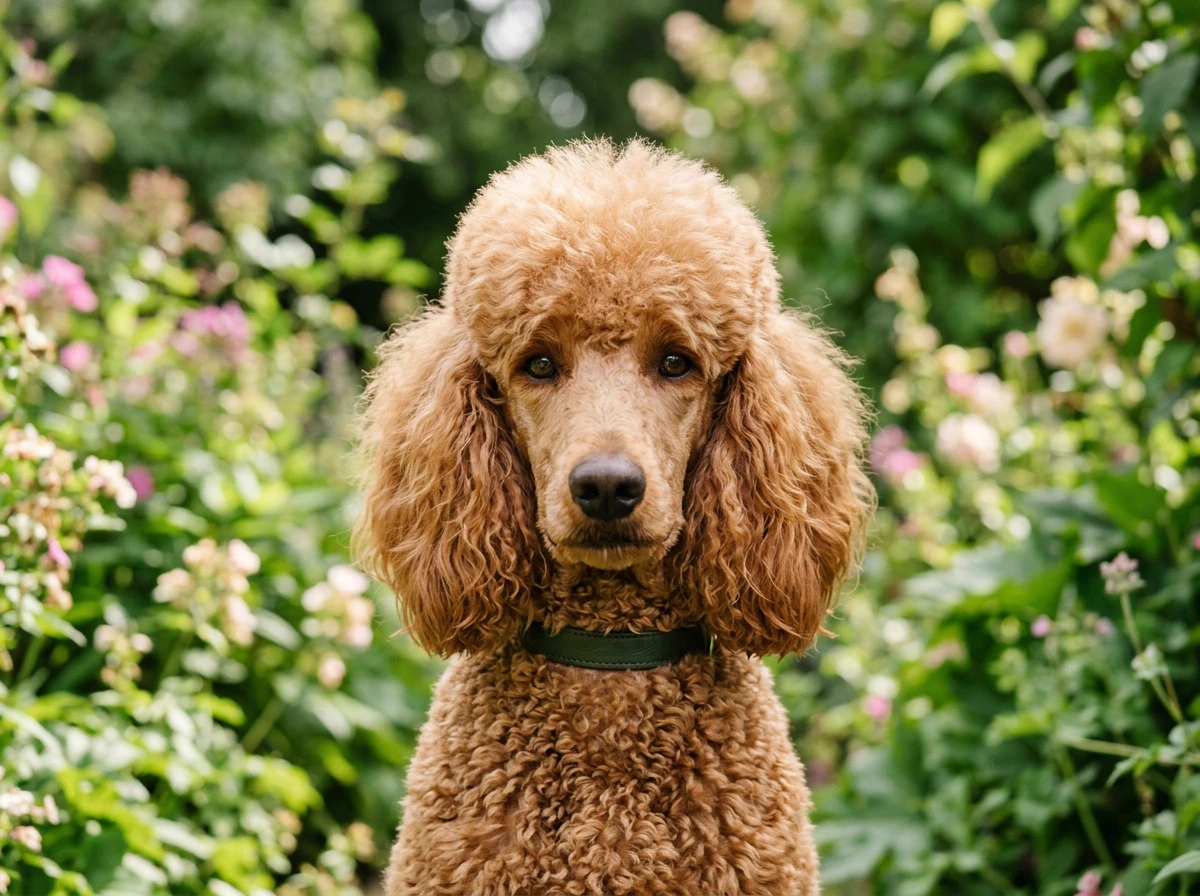
Poodle (Standard) — Complete Breed Guide
Non-Sporting · from France · AKC rank #6 (2025)
Key facts
| Breed group | Non-Sporting |
| Origin | France |
| Weight | 18–32 kg (40–71 lbs) |
| Height | 45–60 cm |
| Lifespan | 10–18 years |
| Coat | curly hypoallergenic |
| AKC popularity rank (2025) | #6 of 202 recognized breeds |
Trait ratings
Our editorial 1–5 scoring, based on breed-standard temperament data.
Monthly cost
Expect roughly $100–$200 per month (estimate: food, routine vet care, grooming, insurance). Larger breeds and heavy groomers sit at the higher end. Price out the years, not just the day, with our monthly dog cost calculator.
Poodle (Standard) coat colors and varieties
The Poodle (Standard)'s coat is curly hypoallergenic. Within the breed you'll come across varieties buyers search for by name — teacup poodle — which usually come down to different lines and breeders rather than different dogs. Color doesn't change the temperament, exercise needs, or health picture described above.
If you have your heart set on a specific look, ask the breeder to see the parents and recent litters, and be wary of anyone charging a big premium for a color alone.
Poodle (Standard) puppies: what to expect
Puppyhood is the expensive, exhausting, wonderful part. Plan for a first vet visit within days of bringing yours home, a vaccine series over the first few months, and training that starts the day it arrives — not at six months.
The first year costs more than the monthly estimate above suggests: vaccines, spay/neuter, a crate, and chewed shoes add up. Socialize early and widely; the temperament scores on this page assume a well-socialized dog.
Common Poodle (Standard) mixes
Designer mixes get a lot of searches, so here's an honest map: a mix inherits unpredictably from both parents — no guarantees on size, coat, or temperament. If a mix catches your eye, read both parent profiles where they exist and judge the dog in front of you.
- Poodle (Standard) × Bichon — judge the individual dog, not the label.
Health issues to know
- hip dysplasia
- progressive retinal atrophy
- Addison's disease
- bloat (GDV)
- Families with children
- First-time owners (easy to train)
- Active owners (running, hiking, sports)
- Low-shedding households
- You can't commit to 1+ hour of daily exercise
- You want a wash-and-go, low-maintenance coat
Frequently asked questions
How long does a Poodle (Standard) live?
Typically 10–18 years. Larger individuals and lines with known health issues tend toward the lower end.
How much does a Poodle (Standard) cost per month?
Roughly $100–$200 per month for food, routine vet care, grooming and insurance — an estimate that varies by location.
Is the Poodle (Standard) good for apartments?
It scores 3/5 for apartment suitability. Workable with enough daily exercise and routine.
Is the Poodle (Standard) good with kids?
It scores 4/5 for kid-friendliness. Excellent family choice, with normal supervision.
Does the Poodle (Standard) shed a lot?
Shedding scores 1/5. Minimal shedding.
What are the pros and cons of Poodles?
Pros: elite trainability (5/5), minimal shedding (1/5), athletic and long-lived (10–18 years). Cons: grooming is the highest-maintenance in our dataset (5/5) — clipping every 6–8 weeks — and the 4/5 exercise need surprises people expecting a foo-foo dog. A Poodle is a working athlete in a fancy coat.
Can Poodles be left alone for 8 hours?
Not as a daily routine — Poodles are intensely people-oriented and smart enough to dismantle your home out of boredom. Most adults tolerate a standard workday with exercise before and after, but 8+ solitary hours every day invites separation anxiety and destructive genius. A dog walker midday changes the equation.
Is the Poodle one of the smartest dog breeds?
Yes — Poodles are consistently listed among the smartest breeds in published obedience-intelligence rankings, and our dataset scores them 5/5 for trainability. That intelligence cuts both ways: a Poodle learns your rules fast and your loopholes faster.
Keep exploring
Related Non-Sporting breeds



Compare Poodle (Standard)

Best for your lifestyle
Free tools
Health information is for general guidance only and is not veterinary advice. Always consult your veterinarian about your individual dog. Cost figures are rough estimates and vary by location.