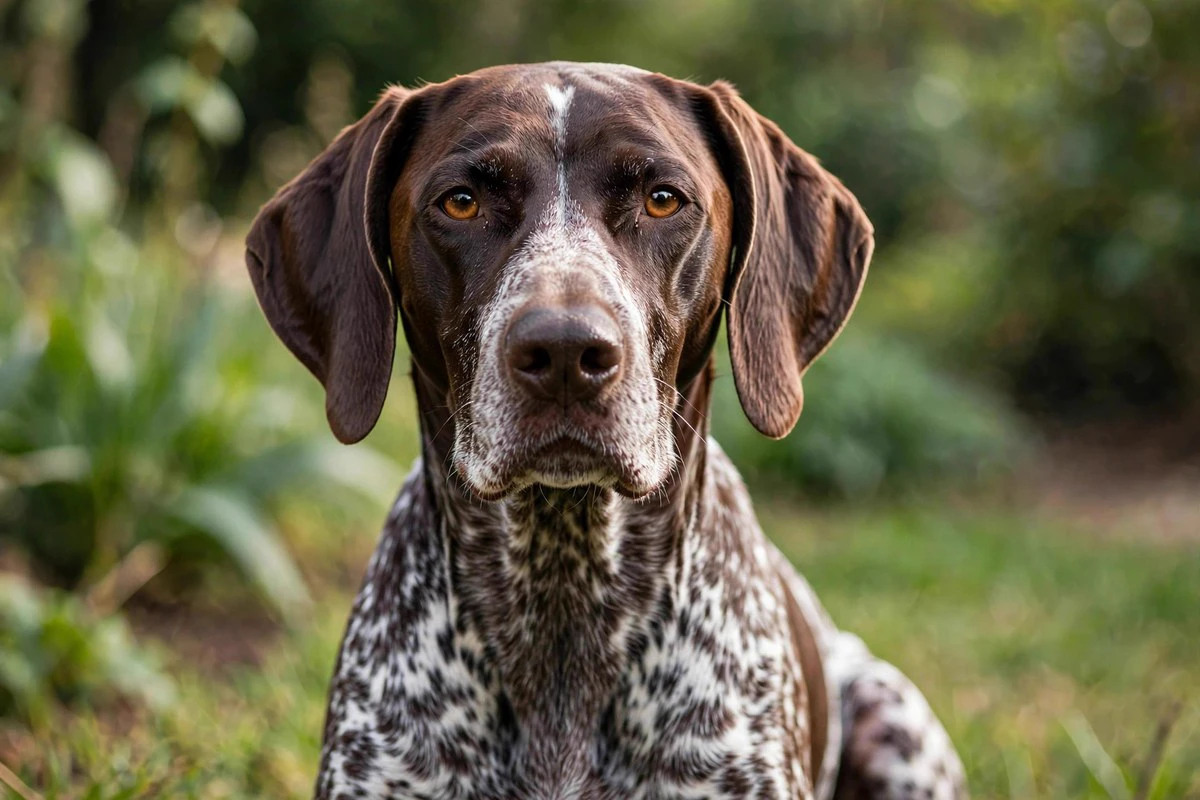
German Shorthaired Pointer — Complete Breed Guide
Sporting · from Germany · AKC rank #9 (2025)
Key facts
| Breed group | Sporting |
| Origin | Germany |
| Weight | 20–32 kg (44–71 lbs) |
| Height | 53–64 cm |
| Lifespan | 10–12 years |
| Coat | short dense |
| AKC popularity rank (2025) | #9 of 202 recognized breeds |
Trait ratings
Our editorial 1–5 scoring, based on breed-standard temperament data.
Monthly cost
Expect roughly $100–$190 per month (estimate: food, routine vet care, grooming, insurance). Larger breeds and heavy groomers sit at the higher end. Price out the years, not just the day, with our monthly dog cost calculator.
German Shorthaired Pointer coat colors and varieties
The German Shorthaired Pointer's coat is short dense. Within the breed you'll come across varieties buyers search for by name — sc, buying a, breeders, hunting — which usually come down to different lines and breeders rather than different dogs. Color doesn't change the temperament, exercise needs, or health picture described above.
If you have your heart set on a specific look, ask the breeder to see the parents and recent litters, and be wary of anyone charging a big premium for a color alone.
German Shorthaired Pointer puppies: what to expect
A German Shorthaired Pointer puppy is an athlete in the making — this sporting breed needs serious daily exercise well beyond a neighborhood walk. The non-negotiables: a vet check in the first week, vaccinations on schedule, and training that burns both physical and mental energy from day one.
Budget beyond the monthly figure above for year one: vet visits, supplies, and maybe training help. If you can, meet the mother — temperament is partly inherited, and her behavior is your best preview.
Health issues to know
- hip dysplasia
- bloat (GDV)
- eye disorders
- von Willebrand's disease
- Families with children
- First-time owners (easy to train)
- Active owners (running, hiking, sports)
- You can't commit to 1+ hour of daily exercise
- You live in a small apartment with no yard access
Frequently asked questions
How long does a German Shorthaired Pointer live?
Typically 10–12 years. Larger individuals and lines with known health issues tend toward the lower end.
How much does a German Shorthaired Pointer cost per month?
Roughly $100–$190 per month for food, routine vet care, grooming and insurance — an estimate that varies by location.
Is the German Shorthaired Pointer good for apartments?
It scores 1/5 for apartment suitability. Not ideal — it needs space and struggles in small homes.
Is the German Shorthaired Pointer good with kids?
It scores 4/5 for kid-friendliness. Excellent family choice, with normal supervision.
Does the German Shorthaired Pointer shed a lot?
Shedding scores 3/5. Moderate, manageable shedding.
What are the negatives of a German Shorthaired Pointer?
Energy that borders on relentless: 5/5 exercise need with 1/5 apartment suitability. A GSP needs to run hard daily — a leashed walk barely registers. They can also be destructive and anxious when under-exercised, and their prey drive makes small pets a risk. This is a hunter’s dog first.
Can a German Shorthaired Pointer be a house dog?
Indoors it is actually calm and affectionate — the problem is earning that calm. Expect to provide 1–2 hours of hard exercise daily; a GSP with a drained battery is a wonderful house dog, and one without is a 20–32 kg wrecking ball. Apartment living (1/5) is not realistic.
Can German Shorthaired Pointers be aggressive?
Not typically — the breed is people-friendly and scores 4/5 for kid-friendliness. What reads as aggression is usually over-arousal: jumping, mouthing, and crashing into everything at full speed. True aggression is rare and, as with any breed, traces to poor breeding or handling.
Keep exploring
Related Sporting breeds


Best for your lifestyle
Free tools
Health information is for general guidance only and is not veterinary advice. Always consult your veterinarian about your individual dog. Cost figures are rough estimates and vary by location.